Dental Bonding for Enhancing Tooth Contours and Symmetry
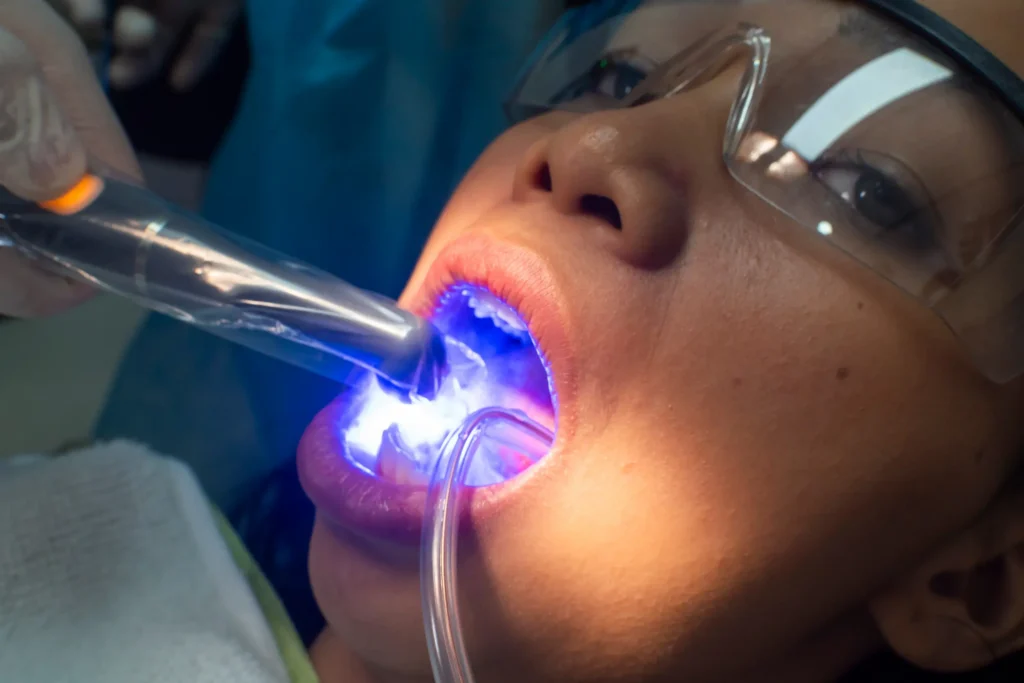
A small chip on a front tooth can pull attention away from an otherwise healthy smile. So can a slightly undersized lateral incisor, a worn edge, or a tooth that angles light differently than its neighbor. These are not always major dental problems, but they matter. People notice asymmetry in fractions of a second, even if they cannot explain what looks off. In cosmetic dentistry, that is often where dental bonding earns its place.
Dental Bonding is one of the most practical ways to refine tooth shape without committing to aggressive treatment. It can soften sharp line angles, close narrow spaces, restore worn edges, and create a more balanced relationship between adjacent teeth. When done well, it is subtle. The goal is not to make teeth look artificial or overly uniform. The goal is to make them look as though they always belonged that way.
Patients often come in expecting veneers because they assume cosmetic improvement requires something extensive. In many cases, bonding offers enough control to make a real difference with less drilling, lower cost, and far less appointment time. For the right person, it can be one of the most efficient treatments in aesthetic dentistry.
Why contour and symmetry matter more than people think
When people talk about a beautiful smile, they usually mention color first. Shade is important, but form often matters just as much. A bright smile with uneven edges or awkward proportions can still look unfinished. On the other hand, teeth that are well contoured and symmetrical tend to look healthy and natural, even if they are not paper white.
Contour affects the way light moves across the tooth surface. A flatter tooth can look broad and dull. A tooth with the right facial curvature and line angles reflects light more like natural enamel. Symmetry affects the way the eye reads the smile as a whole. Perfect mirror-image symmetry is not necessary, and in fact it can look unnatural. What matters is visual balance. The central incisors should feel harmonious with each other. The lateral incisors should support that balance. Canines should frame the smile instead of overpowering it.
This is where bonding becomes more than just “filling in a chip.” It is a sculpting material. Composite resin can be added in small, controlled increments to change width, length, edge position, facial fullness, and transitions between one tooth and the next. A millimeter sounds tiny on paper. In the mouth, a millimeter can completely change how a smile reads.
What dental bonding actually is
Dental bonding uses tooth-colored composite resin, the same general family of material used for many white fillings, to reshape or rebuild part of a tooth. The resin is placed in layers, shaped by hand, cured with a special light, then refined and polished. The process sounds simple, but the artistry sits in the details.
A dentist does not just put material on a tooth and smooth it out. The resin has to match the surrounding shade, translucency, and surface texture closely enough that it disappears in normal conversation and daylight. The contour must respect the way the bite functions. The edge thickness has to be strong enough to hold up, but delicate enough to look like enamel rather than a patch.
In cosmetic cases, bonding is often minimally invasive. Many contour corrections require little to no drilling at all. That conservative approach matters, especially for younger patients or for adults who want to improve aesthetics without removing healthy enamel.
For patients looking into Dental Bonding in Bakersfield CA, this conservative nature is often a major draw. People want visible improvement, but they also cosmetic dental bonding Bakersfield want to preserve options for the future. Bonding allows that in a way more aggressive cosmetic treatments sometimes do not.
The kinds of contour problems bonding can improve
Bonding works best when the problem is moderate, localized, and primarily aesthetic or minor functional. It is not a cure-all, but it is impressively versatile.
Here are some of the situations where it tends to shine:
- Chipped front teeth, especially small corner or edge fractures
- Slightly uneven tooth lengths or worn incisal edges
- Small gaps between teeth, including black triangles in selected cases
- Teeth that look too narrow, too short, or slightly misshapen
- Mild asymmetry from natural anatomy or prior wear
A common example is the patient whose two front teeth are healthy but do not match. One may have a flattened corner from years of use. The other may be naturally rounder and a little longer. Neither tooth is damaged enough to need a crown, and the patient may not want veneers. Bonding can correct the discrepancy in a single visit and often with almost no removal of tooth structure.
Another example is peg laterals, where the upper lateral incisors are naturally smaller or more tapered than average. Bonding can build those teeth into more proportional shapes that fit the rest of the smile. In experienced hands, the result can be elegant and very natural.
Where bonding fits compared with veneers and crowns
Patients frequently ask whether bonding is “as good as” veneers. That is not quite the right comparison. They are different tools for different situations.
Veneers, typically porcelain, offer excellent stain resistance, stable aesthetics, and impressive control over shape and color. They are often the better long-term cosmetic solution when multiple front teeth need broader changes, especially if color, alignment, and contour all need significant correction at once. They do, however, usually require more planning, lab fabrication, and some degree of enamel modification.
Crowns are more structural. They are usually indicated when a tooth is heavily restored, cracked, weakened, or too damaged for a more conservative option.
Bonding sits in a very useful middle ground. It is often ideal when the core issue is shape rather than severe discoloration or major structural breakdown. It is faster, less invasive, easier to repair, and usually more budget-friendly. The trade-off is longevity and stain resistance. Composite can chip, dull, or pick up discoloration over time more readily than porcelain.
That does not make bonding inferior. It makes it practical. A treatment can be valuable precisely because it is conservative and adaptable.
The artistry behind natural-looking symmetry
Symmetry in dentistry is not just a matter of measuring tooth widths with a ruler and duplicating one side on the other. Faces are not perfectly symmetrical. Lips move unevenly. One side of the smile may show more than the other. Even the gum line can differ slightly from left to right. A good cosmetic result respects those realities.
When shaping bonded teeth, a dentist pays attention to line angles, embrasures, edge position, and facial convexity. These details are not cosmetic trivia. They determine whether the restoration blends in or catches the eye for the wrong reason.
Line angles deserve special mention. Moving a line angle slightly inward can make a tooth appear narrower. Broadening the facial contour can make a tooth appear fuller without overbuilding the edge. Lengthening an incisal corner can make a tooth look more youthful, while preserving the right amount of translucency can prevent the result from looking opaque and heavy.
This is why photographs, mock-ups, and a careful visual exam matter. It is also why two cases that seem similar on paper can require very different bonding designs in the chair.
What the appointment usually feels like
For straightforward contour enhancement, the bonding visit is often easier than patients expect. Many cases do not require anesthesia unless decay is being treated at the same time or the reshaping is close to sensitive areas. The dentist cleans the tooth, lightly prepares the surface, applies a conditioning agent so the resin adheres properly, and then builds the shape in layers.
Color selection happens before the tooth dries out too much, because dehydrated enamel can look temporarily lighter. That is a small detail, but it matters. Shade matching under poor lighting or after the tooth has dried can lead to a restoration that looks fine in the operatory and off in daylight.
Once the material is placed, the dentist sculpts the anatomy, cures each increment, and adjusts the bite. Final polishing is not just cosmetic. A smooth, well-polished surface resists stain better, feels more natural to the tongue, and reflects light more like enamel.
For a single chip repair, the process may take less than an hour. For multi-tooth aesthetic bonding, it can take considerably longer because the artistry and bite refinement become more demanding. Rushing these appointments is one of the most common reasons results look bulky or fail early.
When bonding is an excellent choice, and when it is not
The best candidates are people with healthy teeth and gums, realistic expectations, and contour issues that do not demand major orthodontic or restorative correction. Bonding works particularly well when the enamel is intact enough for strong adhesion and when the patient does not have habits that place unusual stress on the front teeth.
Where it becomes less ideal is just as important. If a patient clenches hard, grinds at night, bites fingernails, chews ice, or routinely uses the front teeth as tools, bonded edges are more likely to chip. If a tooth is significantly rotated or crowded, trying to mask that problem with composite alone can create unnatural contours. If discoloration is severe, bonding can improve the appearance, but it may not offer the same optical depth or long-term color stability as porcelain.
There are also cases where the bite dictates caution. If the upper and lower front teeth hit edge to edge or with heavy functional force, adding length or changing shape with composite may need a protective night guard or an entirely different treatment strategy.
Good cosmetic dentistry is not about saying yes to every request. It is about matching the treatment to the anatomy, habits, and long-term goals of the patient sitting in front of you.
Longevity, maintenance, and the real-world trade-offs
One of the more honest conversations to have about Dental Bonding is that it is not permanent. It is durable, but it ages like any restorative material. How long it lasts depends on where it is placed, how much force it absorbs, the skill of the placement, and the patient’s habits.
Small cosmetic additions on low-stress areas can look good for years. Edge bonding on front teeth tends to be more vulnerable because it takes the brunt of function. Some patients get many years out of bonded edges with minimal maintenance. Others need touch-ups sooner, especially if they have a strong bite or rough oral habits.
Composite also tends to lose polish and pick up stain over time, particularly in people who drink a lot of coffee, tea, red wine, or who smoke. That does not mean it suddenly fails. It may simply need repolishing or occasional repair to keep the aesthetics sharp.
The good news is that bonding is usually repairable. If a small chip develops, the dentist can often roughen the surface, add fresh resin, and blend it in without replacing the entire restoration. That repairability is one of bonding’s major advantages.
Patients generally do well when they follow a few practical habits:
- Avoid biting hard objects with bonded front teeth
- Wear a night guard if grinding or clenching is an issue
- Keep regular cleanings so the surfaces can be checked and polished
- Limit frequent exposure to dark staining beverages when possible
- Report rough edges or small chips early, before they worsen
These are not extreme rules. They are common-sense protections for a restoration designed to look refined and natural.
The value of conservative treatment
There is a reason many dentists appreciate bonding even in an era of advanced ceramics and digital smile design. It keeps doors open. If a 27-year-old patient wants to improve the shape of two front teeth, preserving enamel matters. Bonding can make a substantial visual improvement now without locking that person into a more invasive restorative cycle before it is truly necessary.
That conservative philosophy can be especially relevant for younger adults, people with otherwise healthy teeth, and those who want to test a shape change before considering porcelain later. In some cases, bonding becomes the definitive treatment. In others, it acts as a transitional or diagnostic step that helps a patient and dentist decide whether more extensive cosmetic work is worth pursuing.
I have seen patients gain tremendous confidence from remarkably modest changes. A small corner rebuilt on a central incisor. A lateral widened just enough to close a distracting gap. A worn edge restored so the smile no longer looks uneven in photos. These are not dramatic makeovers in the social media sense. They are the kind of refinements that make a face look more at ease.
What to ask before moving forward
Not every dentist approaches aesthetic bonding with the same eye for detail, and patients benefit from asking focused questions. It is reasonable to ask how often the dentist performs cosmetic bonding, whether photographs or mock-ups are used for planning, and what kind of maintenance to expect for your specific case.
It also helps to discuss the endpoint clearly. Are you trying to repair one chipped area so it disappears, or are you trying to create broader symmetry across several front teeth? Those are different goals, and they influence the amount of shaping, the number of teeth involved, and whether whitening should happen first.
Whitening matters because bonded material does not whiten the way natural enamel does. If a patient plans to bleach the teeth, that is often best done before final bonding so the resin can be matched to the brighter shade. Skipping that sequence can leave the restoration looking darker than the surrounding teeth after whitening.
For anyone seeking Dental Bonding in Bakersfield CA, climate is not the issue, but lifestyle can be. People who work irregular hours, live on coffee, or grind under stress may need a more maintenance-minded plan. That is not a reason to avoid bonding. It is simply part of good treatment planning.
Bonding and confidence, without overpromising
Cosmetic dentistry is often spoken about in extremes, either as superficial vanity or as life-changing transformation. Most reality sits between those two poles. A better smile does not solve every problem, but it can remove a source of self-consciousness that has lingered for years.
Patients who hide a chipped tooth when they laugh, crop one side of their smile out of photos, or feel that one oddly shaped tooth dominates their face often experience genuine relief when the issue is corrected. The change can be quiet and still meaningful.
What makes dental bonding appealing is that it does not require a dramatic leap. It allows for careful, measured improvement. The dentist can preserve what is healthy, add where contour is lacking, and shape the result so it supports the rest of the face rather than competing with it.
That restraint is part of what makes great bonding so effective. The best work rarely announces itself. It simply looks right.
A practical path to a more balanced smile
When tooth contours are slightly off, the smile can look less polished than the rest of the person. Dental Bonding offers a direct, conservative way to correct those small imbalances with precision. It can repair chips, refine proportions, soften irregular Dental Bonding Bakersfield CA edges, and improve symmetry in a single visit for many patients.
Its strengths are clear: minimal removal of healthy tooth structure, immediate results, lower cost than porcelain in many cases, and the ability to repair or adjust the work over time. Its limitations are just as real: composite is not as stain-resistant or as durable as porcelain, and it performs best when the case selection is sound.
For the right patient, those trade-offs are well worth it. A carefully bonded tooth can restore harmony to the smile without making the treatment itself the story. That is often the mark of a good aesthetic result, not that people notice the dentistry, but that they notice the person looking comfortable, natural, and fully themselves.
Toothworks of Bakersfield, Dentist and Orthodontist
Address: 1030 H St #1, Bakersfield, CA 93304
Phone number: +16613239421
FAQ About Dental Bonding Bakersfield CA
How long will dental bonding last?
Dental bonding typically lasts between 3 and 10 years before it needs a touch-up or replacement. Its lifespan depends heavily on the tooth's location, your daily habits, and your oral hygiene.
How expensive is bonding a tooth?
Dental bonding typically costs between $100 and $600 per tooth for standard procedures, with a national average of about $431 per tooth. Complex repairs can reach up to $1,000 per tooth.
Is bonding your teeth a good idea?
Dental bonding is generally worth it if you want an affordable, fast, and non-invasive way to fix minor tooth flaws. It typically costs between $150 and $600 per tooth, takes 30 to 60 minutes in a single visit, and preserves your natural tooth enamel. However, it is less durable and stains easier than porcelain alternatives.